 How does a radio programme actually reach its listeners? Who decides what is broadcast? And how can citizens actively participate in local media?
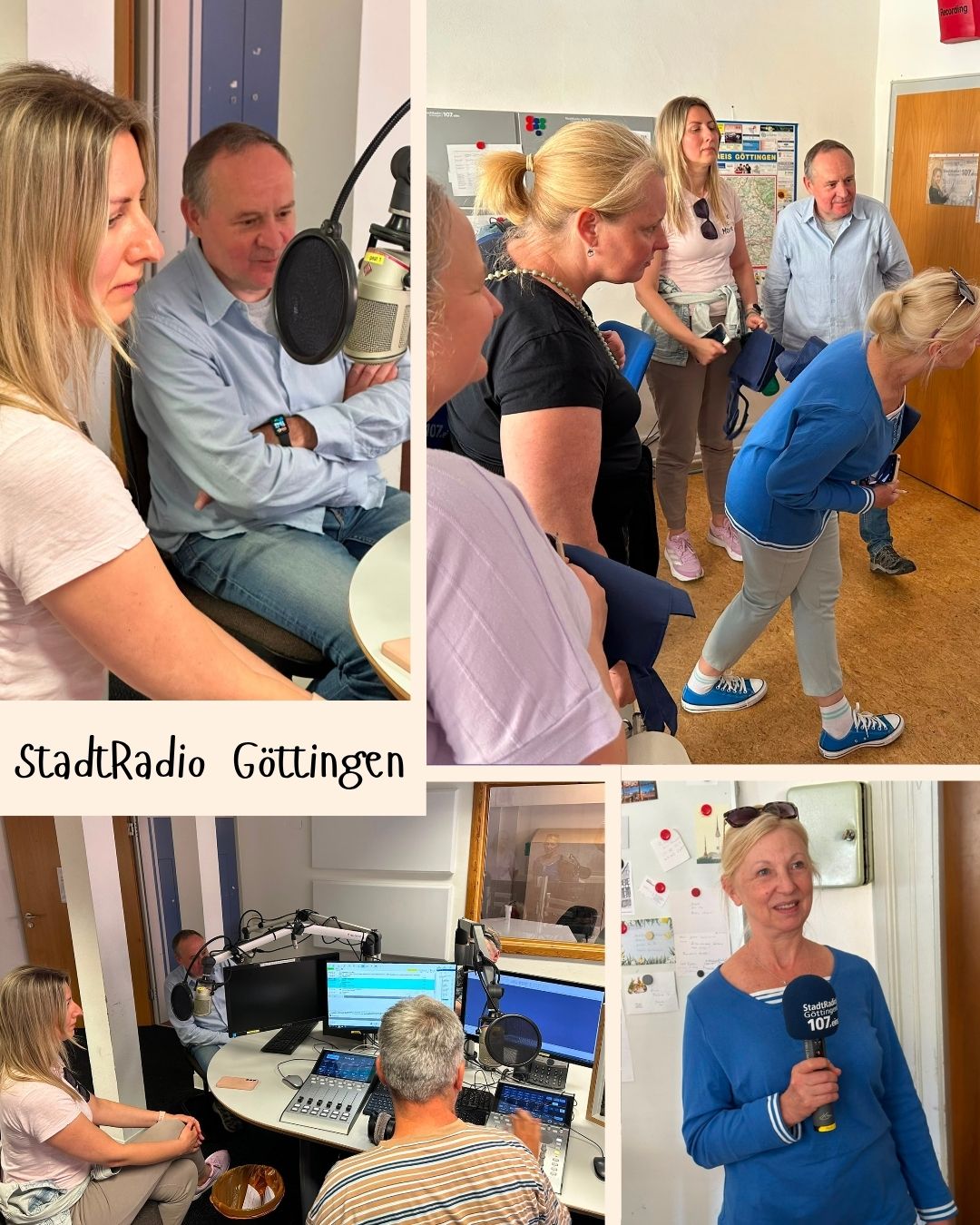
To answer these questions, our UNITE participants visited StadtRadio Göttingen, the local community radio station, where they gained fascinating insights into the world behind the microphone.
During the visit, participants learned how a radio programme is planned, recorded, edited, and finally broadcast. They also discussed the principles of responsible journalism and the German Press Code, gaining a better understanding of the role of independent media in a democratic society.
One of the highlights was stepping into the recording studio themselves. Participants had the opportunity to sit behind the microphone, record their own voices, and observe how audio recordings are professionally edited before going on air. The visit sparked great interest and many questions about journalism, media production, and freedom of the press.
What makes StadtRadio Göttingen particularly special is its mission to promote media literacy. As a community radio station (Bürgerfunk), it not only trains volunteer broadcasters but also cooperates with schools and local organisations throughout the city and district of Göttingen. Citizens are encouraged to develop and produce their own radio programmes, giving local people a platform to share their stories, opinions, and ideas.
For our participants, this was an inspiring example of how everyone can have a voice and actively contribute to public life. Perhaps this visit will even inspire a future UNITE radio programme—sharing stories of integration, new beginnings, and intercultural dialogue.
Experiences like these help participants discover not only how German society works, but also how they can become active members of it.